Facility Management Operations
Hyderabad's Emerging Residential Corridors: What New Communities Need in Year One
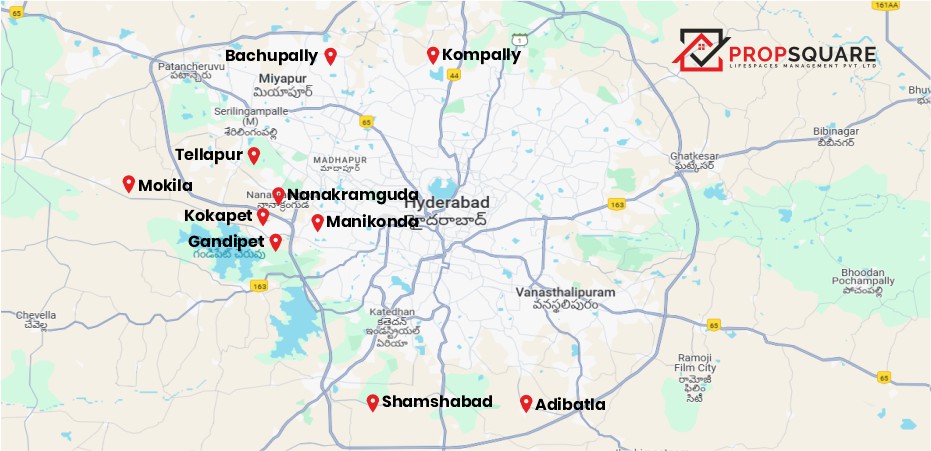
Hyderabad’s emerging residential corridors are where most of the city’s new gated communities are being handed over. For the associations that inherit them, the first year of operations decides more than any later decision will: how the handover snag list is settled, how the site is staffed, and when preventive maintenance starts. Those three choices set the community’s running cost and asset life.
Why year one decides the next ten
A newly handed-over community is not a stable building yet. Assets are under warranty but untested at full occupancy. Commissioning documents, O&M manuals and AMC papers exist, but often sit with the builder rather than the association. Occupancy climbs month by month, so the load on pumps, lifts, STP and the clubhouse keeps changing under you.
Three things go wrong most often in that window:
- The snag list is settled too late. Common-area defects are the builder’s liability, but only while the handover is still open. Once it closes, the same repair becomes the association’s operating expense.
- Staffing is sized to the drawing, not the occupancy. A tower at 30% occupancy and the same tower at full occupancy are different operations. Deploying for the end state from day one burns money; deploying for day one and never revisiting it causes service failures.
- Preventive maintenance starts after the first breakdown. PPM schedules that begin late convert warranty claims into paid repairs.
None of this is corridor-specific. What is corridor-specific is the asset mix you inherit.
What each corridor demands operationally
High-rise clusters — Kokapet, Nanakramguda and Tellapur. Tall towers concentrate the technical load: pressurised water systems, multiple lift banks, large clubhouses, basement ventilation and fire systems that need to work as one. The operational priority is MEP competence and a clean handover of commissioning records. Clubhouse and amenity upkeep matters more here than anywhere else, because it is the part residents were promised and the part they judge.
Mid-rise and mixed layouts — Manikonda, Bachupally and Kompally. A mix of older and newer stock in the same neighbourhood, often with smaller associations and tighter budgets. The work is disciplined basics done consistently: housekeeping coverage, security rostering, water and STP management, and honest monthly reporting so a volunteer committee can see where the money goes.
Industrial and airport-adjacent — Adibatla and Shamshabad. Employment-led corridors with a mix of residential and commercial occupiers. Shift patterns are unusual, so security and housekeeping rosters have to follow actual footfall rather than a standard day pattern. Statutory compliance tends to be scrutinised more closely by commercial neighbours.
Villa and plotted layouts — Gandipet, Mokila and the belt around them. These behave differently from towers. Assets are distributed rather than stacked, so travel time inside the property becomes a real cost, landscaping and street lighting carry more of the maintenance load, and water and sewage handling is often decentralised. Headcount planning that works for a high-rise will not work here.
The year-one sequence that works
- Take over properly. Represent the association through handover (HOTO): inspect common-area assets, collect commissioning documents, O&M manuals, warranty papers and AMC contracts, and build the snag list while the builder is still liable.
- Establish the asset register. You cannot maintain what is not listed. Every serviceable asset, its warranty position and its service interval.
- Size deployment to current occupancy. Set it against the actual population, with a written trigger for when it steps up.
- Start PPM before the first failure. Schedules for pumps, lifts, DG, STP/WTP, fire systems and the clubhouse, running from month one.
- Close the compliance file. Statutory registers, EPF and ESI for deployed staff, PSARA cover for security, lift and fire clearances, water testing.
- Report monthly, in writing. Complaint closure, PPM completion, consumption and spend — so the committee governs on evidence.
Best fit
- A newly handed-over community that has not yet closed its snag list.
- An association running several separate vendors and wanting one accountable team.
- A builder holding a property between handover and full association formation.
Not a fit
- Anyone looking for property broking, sales or investment advice. PropSquare runs and maintains buildings; it does not sell them.
- A single flat or an individual home needing one-off repairs rather than ongoing operations.
- Buying a bare headcount at the lowest rate, with no reporting or compliance expectation.
Questions new committees ask
We are still in handover. Is it too early to appoint an FM team? It is the best time. The value of an FM partner is highest while the builder is still liable for common-area defects, because the snag list can be built and pursued properly. Appointing after handover closes means inheriting those defects as your own operating cost.
How should we size the manpower for a partly occupied tower? To current occupancy, with a written trigger for stepping up. Deploying for full occupancy from day one wastes money the association does not yet collect. The trigger should be occupancy-based and agreed in advance, so scaling up is not a negotiation each time.
Who holds the AMC contracts after handover? The association should, and this is worth checking early. Lift, DG, fire and STP AMCs are frequently still in the builder’s name months after handover, which leaves nobody clearly responsible when a unit fails. Transferring them is part of a clean takeover.
Does PropSquare operate in these corridors? PropSquare serves communities across Hyderabad, including the corridors above, from its HITEC City base. Coverage works by deployment to your site rather than a branch in each locality — the locality pages linked above set out what the service covers in each area.
What should the first monthly report contain? Complaint volume and closure time, PPM completion against schedule, consumption for water and power, staff attendance against the agreed deployment, and spend against budget. If a report does not let a committee ask a hard question, it is not a report.